
Hazera launches ToBRFV resistant varieties in Mexico

Hazera launches ToBRFV resistant varieties in Mexico

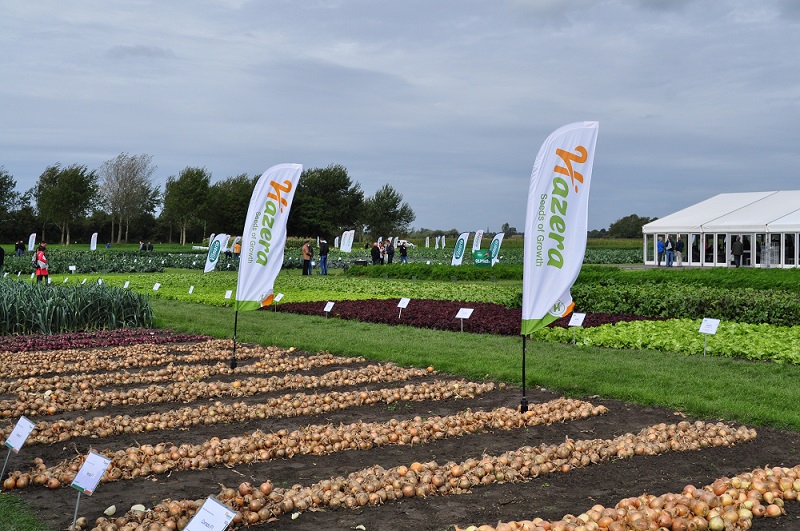
After having announced the pipeline of its ToBRFV resistant varieties, Hazera is proud to launch its first resistant varieties for the Mexican market and showcase them at the most important event for agriculture in Latin America- EXPO AgroAlimentaria Guanajuato® 2022 in Mexico.
 

ToBRFV launch

ToBRFV is very noticeable in Mexico and growers have been faced with diminished yields and battered fruit. ToBRFV is a huge problem for tomato production, affecting the yield and fruit quality with coloring issues and brown spots on fruits impacting directly on the marketable yield.

Since ToBRFV hit tomato growers worldwide, Hazera’s R&D team has been working tirelessly, for several years, to find varieties capable of giving an effective level of ToBRFV resistance without compromising the yield and fruit quality. “These efforts included in-depth trials in many locations, under different conditions in a global scale, to confirm that we are able to provide solutions, with the right balance between performance and ToBRFV protection”, according to Alejandro Szechtman, Hazera’s Portfolio Marketing Director.

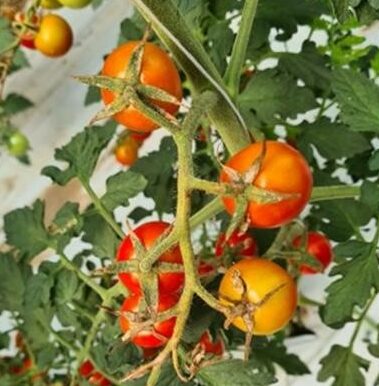
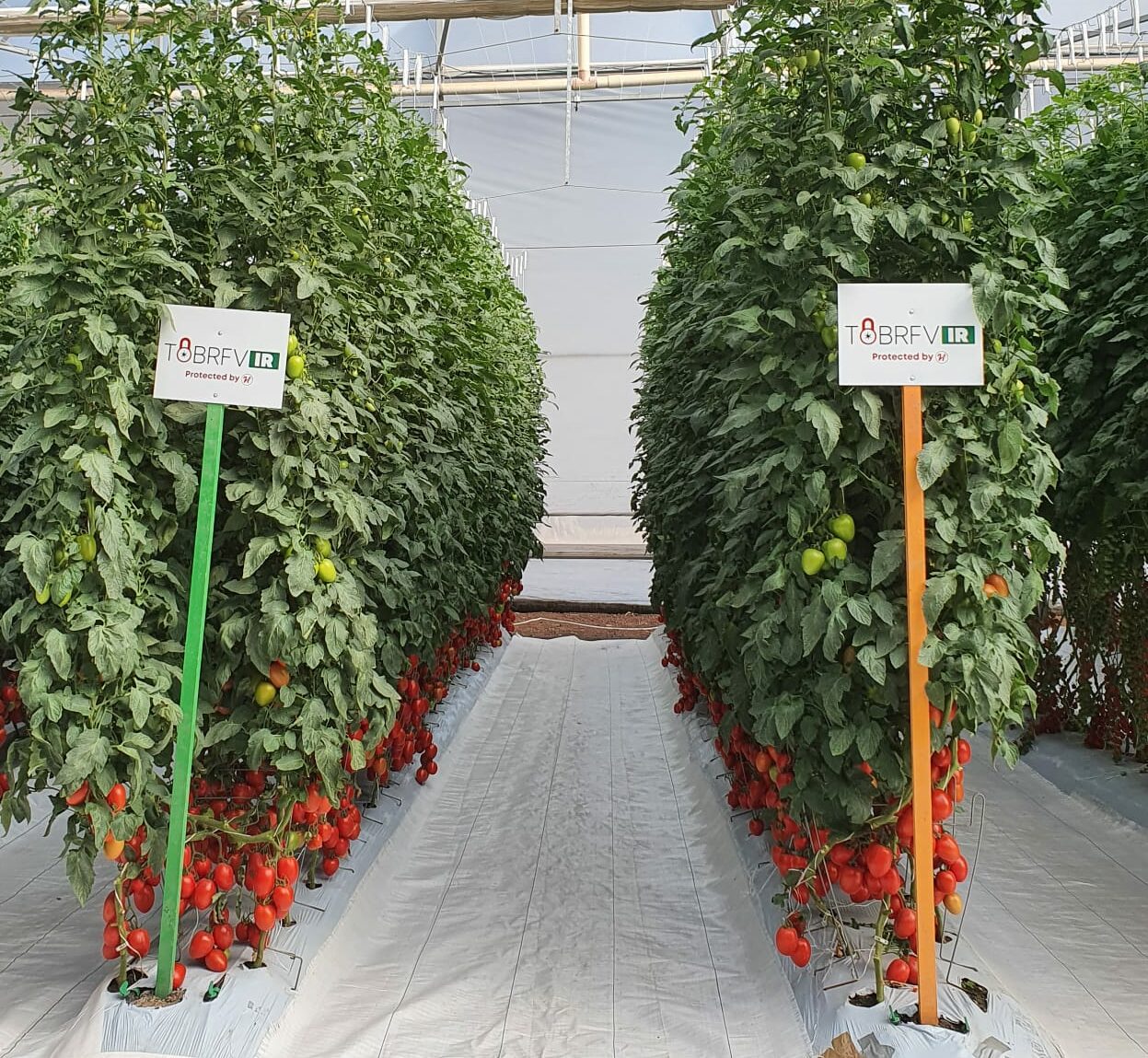
With the optimal balance between protection and performance, Canelo, one of Hazera’s tomato varieties with resistance to ToBRFV, is an indeterminate Roma type with a vigorous plant, which maintains a balanced yield under adverse environmental conditions, due to its wide array of resistances. “Through vast trialing of Canelo in most regions of Mexico, including San Luis Potosi, Baja California, Michoacan, Sinaloa, and Coahuila, Canelo provides high yield, excellent fruit quality, good maturation with an intense red color, as well as excellent firmness, maintaining L and XL sizes with average weights of 150 to 160 grams throughout the production cycle”, according to Javier Angulo- Product Development Manager, Mexico.
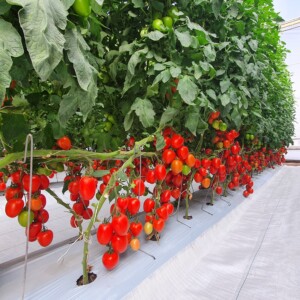
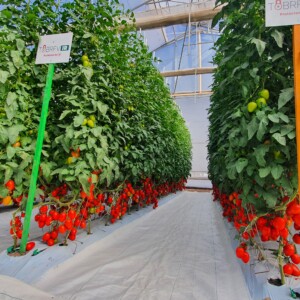
 

“Canelo”

Canelo is a very productive variety, ideal for growing in a net house or greenhouse. Additionally, with its ToBRFV resistance, Canelo is able to serve the Mexican grower as an effective tool to face the highly infectious virus, which is supported by local growers, who claim that “Canelo is a very strong and healthy plant with outstanding high fruit quality.”

Looking forward, “Hazera is continuing its efforts to provide effective varieties to better cope with ToBRFV on a global scale and, in Mexico, will launch several new varieties, including the up and coming, new Indeterminate Grape Tomato, ‘Pendragon’, a variety that combines ToBRFV IR resistance with high yield, long shelf life, and good taste, following our commitment to provide growers varieties with the optimal balance between protection and performance,” says Alejandro Szechtman.
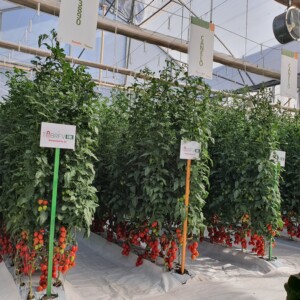
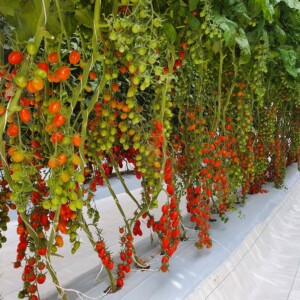
 

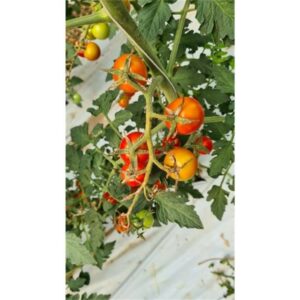
ToBRFV range / “Pendragon”

More News

Hazera’s Official Training Video: Tomato Brown Rugose Fruit Virus (ToBRFV)

We are happy to present Hazera’s training video and sanitation guide for dealing with the new ToBRFV virus.

The purpose of this video is to assist growers and farmers to gain a better understanding of the ToBRFV virus, and to share some practical advice and active measures for eradicating the growth of this virus through the use of stringent hygiene and highly effective sanitation. (more…)

More News

ToBRFV in Tomato Plants

by Dr. Yaniv Rotem – Solanaceae Pathologist, Hazera


General background

The Tomato Brown Rugose Fruit Virus – ToBRFV – is a relatively new viral disease, first appearing in the Middle East in 2014. The disease has since spread rapidly to many other areas in the world, and currently constitutes a major global problem in tomato crop production worldwide.

In Israel, all tomato production areas have been severely affected by ToBRFV, and the effects of the disease are evident both in the tomato greenhouses and fields, and in the quality and appearance of the fruits which are sold.


Symptoms of the disease

As a rule, the symptoms of the disease are similar to the typical symptoms of ToMV, but the severity of the symptoms can differ from that known with ToMV:

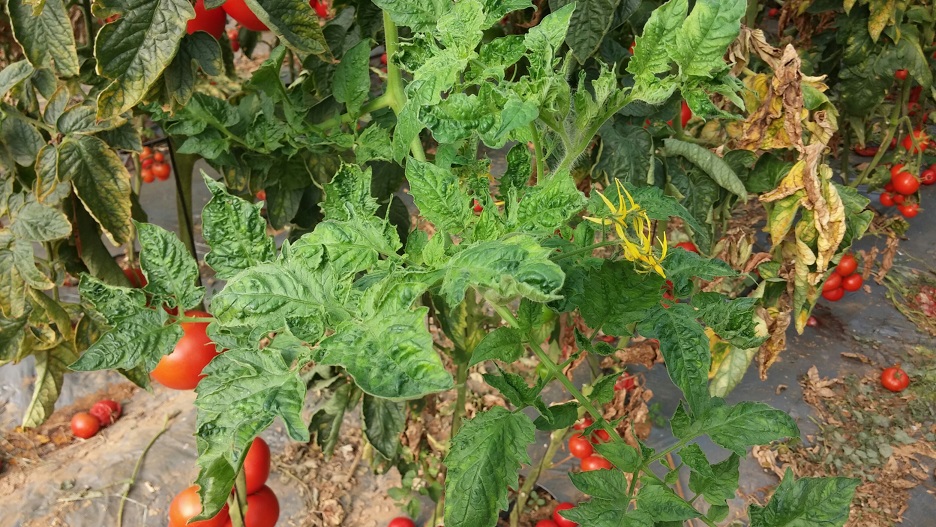
  • In the leaves – a mosaic appears, which is particularly noticeable on young leaves and at the growth vertices. In some cases, there is narrowing of the leaflet blade, and in certain cases the leaves become entirely threadlike (“shoestrings”).
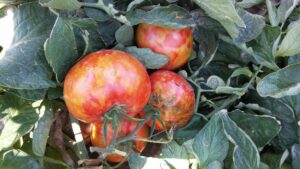
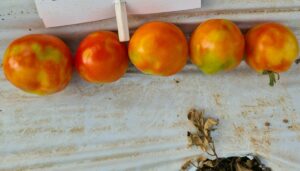
  • In the fruit – yellow spots develop which become necrotic at a later stage. In some cases, “chocolate spots” appear on the fruit. In cases of severe damage, the fruit becomes wrinkled and distorted. The virus name (“Brown Rugose Fruit”) was given due to the wrinkled appearance together with the brown spots.
  • Note that in contrast to the characteristic situation when affected by ToMV, in which symptoms generally appear in the fruit only in cases of particularly severe damage to the foliage, in the case of ToBRFV – there is no connection between the severity of damage to the fruit and severity of damage to the foliage: there are situations in which serious damage to the fruit is observed while no symptoms appear on the leaves, or vice versa – cases of severe symptoms in the foliage and lack of symptoms in the fruit.
  • In certain cases – necrosis develops of the calyx of the fruit, the fruit peduncle, and the central spine of the cluster of fruit.
  • When a susceptible variety is infected with ToBRFV, the main damage is a significant weakening of the plant and its capability to produce clusters of fruits over a long season.

In the wake of the viral infection, tomato cultivation in Israel has changed entirely: due to the weakening of the plants, growers currently have almost no possibility to grow tomatoes in a long central season of 9-10 months as was customary before the virus’s appearance; instead, shorter growing seasons of 4-5 months are now customary, intended for harvesting a few clusters only.


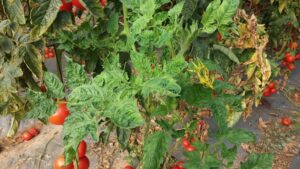
Symptoms on leaves – severe mosaic and narrowing of some of the leaf lobes, to the point of appearing “thready”


Severe symptoms in the fruits

Symptoms of necrosis in the calyx, fruit peduncle and the spine of the cluster

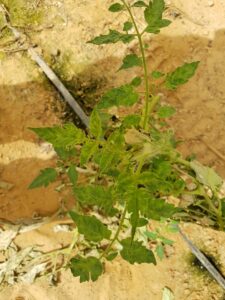
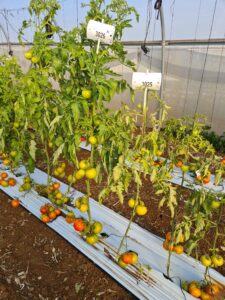
Weakening of the plant as a result of viral infection in a susceptible variety (on right) compared to a variety that is largely similar to it but is resistant to the virus (on left).


How is the disease transmitted?

  • ToBRFV is very easily transmitted mechanically – by human contact, by work tools, support wires, or any entity that comes in physical contact with an infected plant or soil that contains the virus and later comes in contact with healthy plants. It is important to remember that particles of this virus are particularly resistant to environmental conditions, and are capable of surviving for long periods in soil or on infected surfaces.
  • Since the virus is capable of surviving in soil for a long period – the virus is also transferred with infected soil that is moved from one place to another (by sticking to shoes, to work tools that are moved from one plot to another, etc.).
  • The virus is transmitted in seeds – a seed produced from an infected plant is likely to carry virus particles on its surface.
  • The virus can also be transmitted by bumble bees, which serve to pollinate during the cultivation process.


Prevention and treatment

  • Since the outbreak of the disease, Hazera together with Limagrain Group have been working on a comprehensive study of the issue, in which tomato varieties with intermediate levels of resistance to the virus were developed. The first patent in the world for resistance to ToBRFV was registered by Limagrain in 2017. Using these varieties provides an optimal solution for growing tomatoes in conditions of infections with ToBRFV, while maintaining the varieties performance.
  • Observing phytosanitary rules is key to preventing the disease:
    • Making sure to have clean clothes, jackets and gloves for those entering the greenhouses.
    • Making sure to sterilize all equipment used.
    • Sterilizing shoes in an immersion pit upon entrance to the greenhouse.
    • Being strict about the order in which buildings are entered – the workday begins with the buildings housing the young, healthy plants and continues to the buildings housing the more mature plants.
  • Plants in which infection is discovered should be immediately removed from the greenhouse, being careful to avoid contact with neighboring plants.
  • Using healthy seeds and seedlings is another key to preventing the disease. Hazera is strict about performing health tests in licensed laboratories, according to international standards and the Plant Protection Services. Checking that seeds are free of ToBRFV is done by the ISHI Protocol, which is the international protocol accepted throughout the world.
  • Being strict about good sanitization – sterilizing the soil or growth medium and the greenhouse space when cultivation is completed.

More News